


 |
 |
 |
 |
|
 |
 |
SAE J2735-Draft-Rev15 [issued: 01-30-07]
-
155 -
This is an SAE Motor Vehicle Council draft document of the DSRC committee, subject to change.
ANNEX A-4 COOPERATIVE FORWARD COLLISION WARNING
Application Description
The cooperative forward collision warning system application may be designed to aid the driver in avoiding or
mitigating collisions with the rear-end of vehicles in the forward path of travel through driver notification or warning of
the impending collision. The system does not attempt to control the host vehicle in order to avoid an impending
collision.
Flow of Events
Flow of events
1.
Vehicle “A” sends MSG_BasicSafetyMessageFrame, Part I
2.
Vehicle “B” receives message
3.
Vehicle “B” recognizes that Vehicle A’s message is relevant and, per the message
information (e.g. location, speed, heading, deceleration, brake pressure, etc.), that
trajectories of Vehicles “A” and “B” will likely intersect.
4.
Vehicle “B” warns its driver of the potential forward crash.
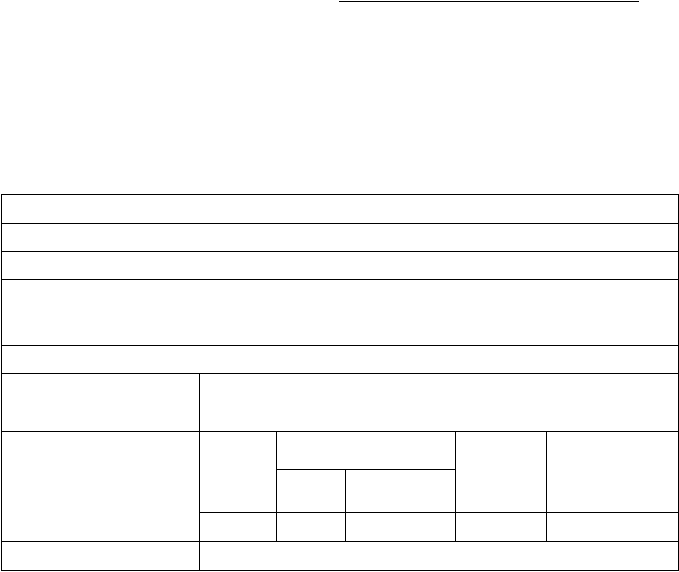
Hardware Devices:
DSRC radio
Positional Sensors
Human-Machine Interface
Occupant
Vehicle
System
Driver
Passenger
Service
Provider
Road
Department
Actors: (What entities
play an active role in use)
X
X
Support information:
CAMP-VSC Task 3 Report, 2003
Concept of Operations
This application is similar to the Emergency Electronic Brake Light scenario (Annex A-2). In the Cooperative
Forward Collision Warning scenario, however, the application warns the driver when the possibility of a collision
with a vehicle in front of the host vehicle becomes likely, whereas the brake light application simply informs the
driver of the onset of braking, along with an indication of braking rate. DSRC communications are used to allow the
host vehicle to detect position, velocity, acceleration, and turning status information for all equipped vehicles in the
vicinity. The in-vehicle unit analyzes these parameters for forward vehicles as contained in their
MSG_BasicSafetyMessageFrame, Part I and MSG_BasicSafetyMessageFrame, Part II messages. The unit then
projects expected future vectors for these vehicles. If this analysis determines that a collision is likely, an
appropriate warning is issued to the driver.
Sensors and Other System Needs
On-board sensors, such as radar systems, could be used to confirm the imminent collision determination derived
from the DSRC communications analysis.
A map database, where available, may help to provide specific, relevant information related to current road
segments. This could allow, for example, intersection geometry or road curvature to be taken into account.